
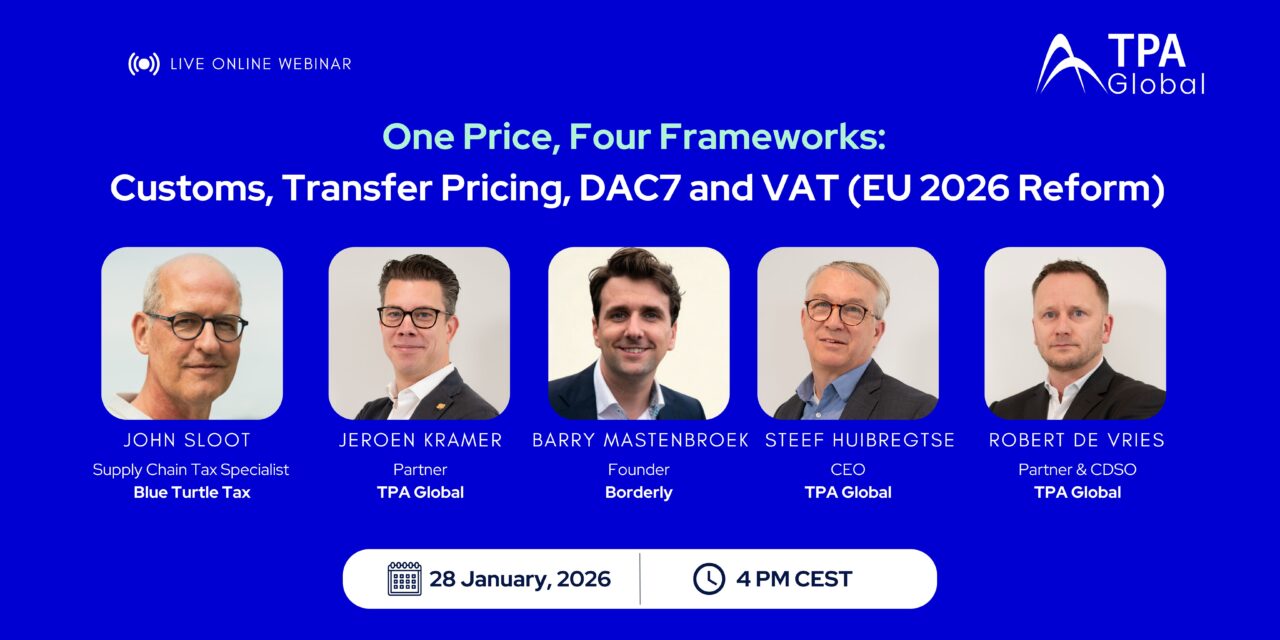
EU e-commerce is entering a period of structural change. New customs measures for low-value imports, evolving VAT rules, and increased data reporting obligations are reshaping how cross-border online sales into the EU must be structured and documented. Without a coordinated approach, businesses risk higher landed costs, reporting inconsistencies, and growing audit exposure.
This archived webinar—hosted by TPA Global and industry specialists—explores how companies can align customs, VAT, transfer pricing, and platform reporting within their e-commerce operating model. Participants gain practical insight into business model design, importer-of-record structures, and the growing importance of transactional data consistency across regulatory frameworks.
✓ EU Customs Reform for Low-Value Imports – How the removal of the €150 duty exemption and the introduction of parcel-based duties and handling fees affect B2C e-commerce models.
✓ Rethinking the IOSS and Direct-to-Consumer Model – When existing import structures become less efficient and what alternative models mean operationally.
✓ Business Model Design and Importer Structures – The implications of shifting to EU-based selling entities and new importer-of-record setups.
✓ The “One Price, Four Frameworks” Concept – How a single transaction is viewed differently for customs valuation, VAT, transfer pricing, and platform reporting.
✓ Data Consistency as a Compliance Requirement – Why mismatches between declared values, tax reporting, and platform data can trigger multi-authority scrutiny.
✓ Practical Steps Toward an Integrated Approach – How to improve coordination between tax, customs, finance, and operations when redesigning e-commerce structures.
Subscribe to our newsletter for future webinars, whitepapers, and industry updates.